How B Corp Thinking Is Shaping the Future of Workplaces
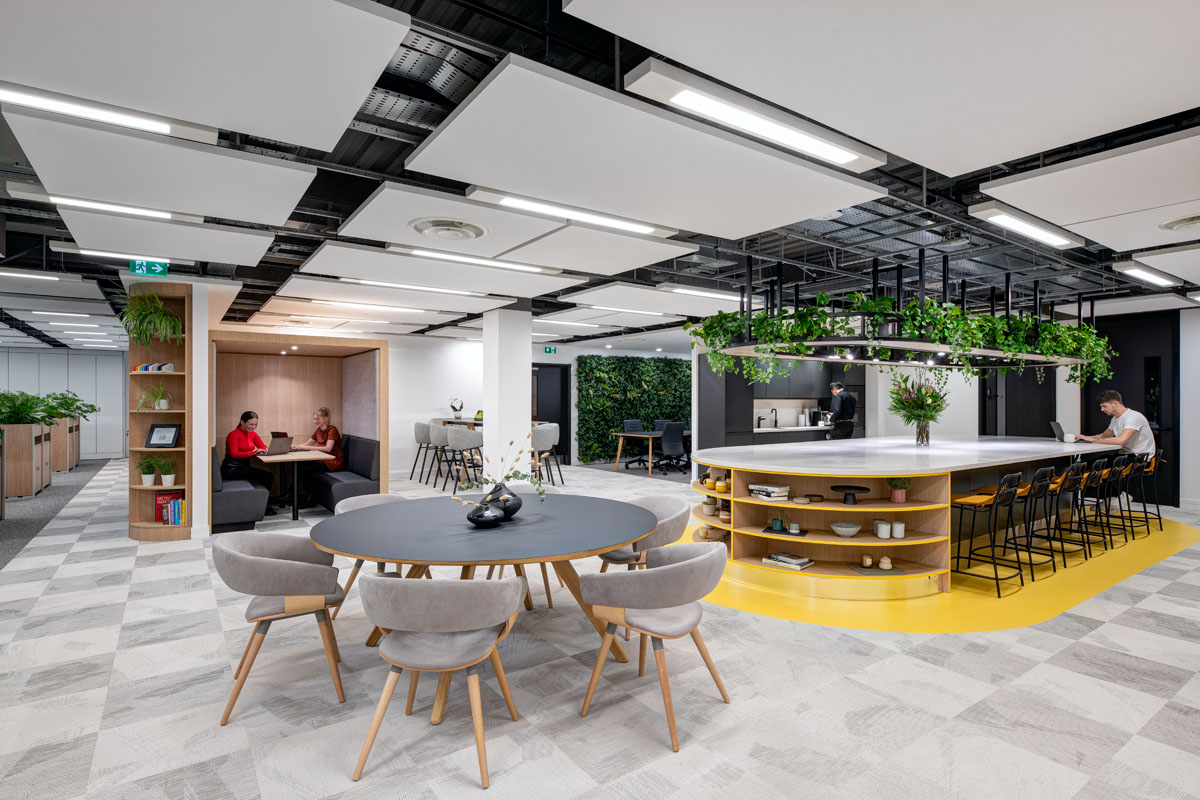
The office is no longer just an operational asset. It is a public expression of values.
Over the past few years, the B Corp movement has reshaped expectations of what responsible business looks like. What began as a certification framework has become a global signal of intent: businesses must now consider people, planet and profit as interconnected obligations, not competing priorities.
This shift is influencing how companies operate, how they communicate their impact and, increasingly, how they design the environments where their people work.
For leaders responsible for culture, workplace strategy and sustainable growth, the message is becoming clearer. The office is no longer just an operational asset. It is a public expression of values.
At DENTON, we see the same shift unfolding across our projects. Organisations are looking beyond amenities and aesthetics, and towards workplaces that demonstrate purpose, accountability and long-term responsibility.
From Certification to Cultural Blueprint
B Corp principles encourage companies to act with clarity and intention. They prioritise social value, environmental responsibility and transparent governance.
These same themes are now shaping the next era of workplace design.
In the early post-pandemic period, office investment often focused on visual impact and high-energy features designed to encourage people to return. B Corp thinking shifts the conversation from attraction to alignment. Instead of asking how to draw people back, responsible businesses ask what their space says about who they are.
A values-aligned workplace:
- Supports wellbeing as a strategic choice, not a perk
- Considers its environmental footprint at every stage
- Strengthens community connection
- Builds trust inside and outside the organisation
- Carbon reduction – embodied and operational carbon must be managed with the same seriousness as financial cost
- Asset longevity – flexible, adaptable spaces reduce waste and extend the life of a workplace
- Authenticity – clients, employees and investors are quick to identify when sustainability claims and physical environments do not match
This is where workspace strategy and responsible business policy increasingly overlap.
Designing for People, Not Optics
A key principle of the B Corp framework is social impact. In workplace terms, this means designing environments that put people at the centre of every decision.
For CEOs and HR Directors, the priority is creating conditions that support performance, clarity and connection. For Workplace Transformation Leads, it means designing spaces that respond to the realities of modern work instead of reacting to short-term trends.
Richard Douglas, Director at DENTON, explains:
“Responsible design starts with intention. Our clients want spaces that genuinely improve the working day. That means clear zoning, sensible material choices and environments that support collaboration and concentration without distraction. People feel the difference when design decisions are made with purpose rather than spectacle.”
This is where the influence of B Corp thinking is most visible. The goal is not to impress; it is to improve. Explore our recent article where we discuss if we are past peak amenity in office design.
Sustainability Beyond Statements
Environmental responsibility is another cornerstone of the B Corp movement, and its role in workplace design is growing rapidly.
Many organisations are moving away from high-impact, highly specified fit-outs in favour of smarter, lower-carbon methods. Retrofit, cut and carve, selective reuse and material circularity are becoming standard conversations at board level.
This shift is driven by three pressures:
Richard Douglas, Director at DENTON, notes:
“Responsible design should feel honest. Natural light, improved air quality and materials with a clear provenance often deliver a stronger experience than the features that dominated the last design cycle. These elements improve wellbeing and reflect a more grounded, transparent approach to workplace creation.”
Transparency in the Built Environment
Transparency is fundamental to B Corp accreditation, and it is increasingly a priority in workplace strategy.
For office design, transparency shows up in three ways:
- How spaces are created – material choices, supply chain visibility, energy performance, design rationale
- How spaces are used – clear navigation, intuitive layouts, and environments that help people understand how best to work
- How spaces reflect organisational values – visible commitments to wellbeing, accessibility and community benefit
This level of clarity builds trust. It removes ambiguity about what an organisation stands for and makes the workplace a credible extension of its mission.
For leaders shaping organisational culture, transparency in the physical environment is becoming a powerful tool. When design decisions are easy to understand, cultural expectations become easier to live out.
Workplaces as Engines of Social Value
One of the least discussed but most powerful aspects of B Corp thinking is its emphasis on community.
An office has a physical footprint, but it also has a social footprint. It influences local ecosystems of food, retail, transport and connection.
Forward-thinking occupiers are now assessing:
- How their spaces contribute to the local economy
- Whether their workplace is accessible, inclusive and welcoming
- How often they engage local suppliers, artists and trades
- The cultural impact of remaining in established neighbourhoods rather than relocating
- Spaces that support clear, meaningful work
- Designs that reduce impact and build long-term value
- Environments that reflect organisational values with credibility
- Workplaces that strengthen community identity and connection
This aligns directly with DENTON’s approach to responsible design. The places companies choose to build, retrofit or maintain influence the character and cohesion of their communities. Creating value locally is now recognised as a strategic advantage, not a CSR gesture.
Values-Led Workplaces: The Next Competitive Edge
B Corp thinking has already reshaped how leaders talk about business responsibility. It is now reshaping how they design the environments that underpin culture, performance and brand reputation.
The next generation of offices will be defined by:
Douglas summarises it simply:
“When workplace design is rooted in purpose, everything becomes clearer. Decisions hold together. People feel supported. The building tells the truth about the organisation. That is where the future of office design is heading.”
At DENTON, we view B Corp thinking not as a certification exercise but as a blueprint for responsible design. The workplaces that last will be those created with intention, humanity and a commitment to the people and places they serve. Get in touch to work with DENTON on your next sustainable office fit-out.