Workspace Design Show 2026: Circularity, Wellbeing and the Rise of Connected Workplaces
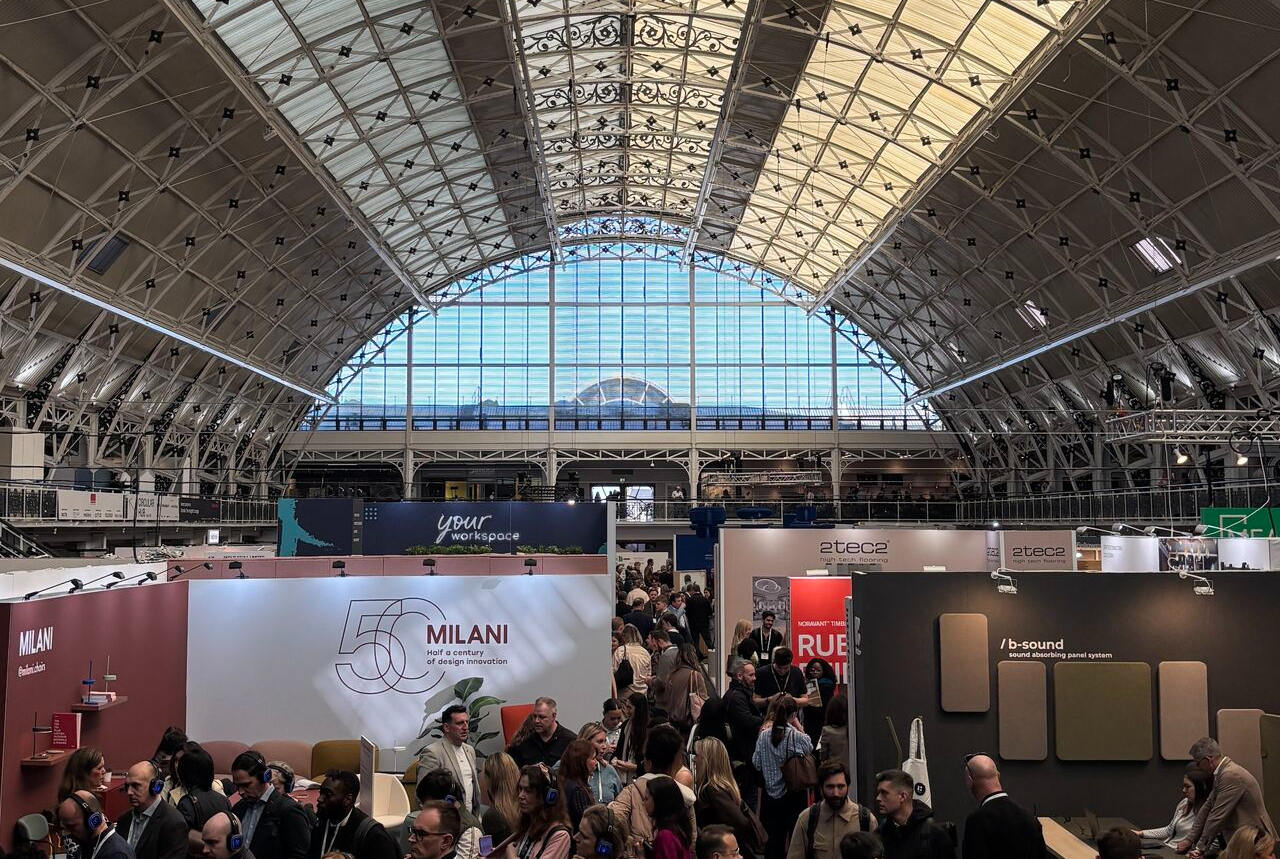
When I visited the Workspace Design Show 2026, what stayed with me was not just the scale of ideas on display, but how grounded many of them felt in real design challenges. It was inspiring, yes, but it was also practical. I came away with a much clearer sense of where workplace design is heading and how the most interesting ideas are moving beyond concept and into delivery.
As a designer at DENTON, the show gave me the chance to meet new suppliers, reconnect with familiar ones and explore products, materials and approaches that are responding to the changing expectations being placed on workplace environments. Across the exhibition floor and talks programme, I kept seeing the same themes reappear: circularity, wellbeing and adaptability. Not as separate trends, but as parts of the same conversation.
This year’s theme, Connected Realities, felt like an accurate reflection of that. More and more, the workplace is being designed as an interconnected system. The focus is no longer just on how a space looks, but on how it performs, how it supports people and how it can evolve over time through responsible office design.
The first thing I noticed: more personality, more intent
One of the most immediate things I picked up on at the show was the confidence in the visual language of workplace design. Materials, furniture and finishes felt bolder, softer and more expressive. There was much more colour, more tactility and more personality than I have seen in previous years.
For me, that shift matters because it reflects a wider change in what the office is expected to do. It is not enough for a workplace to be functional or polished. It has to feel engaging. It has to encourage people in, support interaction and create an environment people want to spend time in.
What I found interesting was that this was not just about aesthetics. The most effective products and spaces on show used colour, texture and materiality with real purpose, shaping environments that felt more human and more responsive to how people work.
Reuse is no longer a compromise
One of the standout talks I attended was A New Era for Creative Design, which focused on reuse. That session stayed with me because it reframed sustainability in a way that felt genuinely useful to the design process.
Too often, reuse can still be treated as a limitation or as something that sits slightly outside the creative ambition of a project. What this talk reinforced was the opposite. Reuse can be a driver of creativity. It asks designers to look again at materials, furniture and existing spaces with more imagination and more intent.
That way of thinking was visible more broadly across the show as well. Circular design is clearly moving further upstream. It is being considered earlier, at briefing and strategy stage, rather than being introduced later as a sustainability measure.
I saw a growing emphasis on buildings as material banks, with more attention being given to how elements can be reused, repurposed and reconfigured over time. From my perspective, that opens up exciting design possibilities, but it also makes commercial sense.
Circular approaches can help to:
- reduce embodied carbon
- support ESG objectives
- extend the life cycle of interior elements
- improve long-term adaptability
- reduce future capital expenditure
The ambition is there. The next challenge is making sure procurement and supply models can support that ambition at scale.
Wellbeing is becoming more sophisticated
Wellbeing was another major thread running through the show, but what interested me most was how much more developed the conversation now feels.
It is no longer just about adding some biophilia or visual cues. The discussion has moved towards creating environments that actively support focus, clarity, collaboration and comfort. In other words, spaces that are designed around how people actually feel and function during the working day.
Across the talks and products I saw, there was a real emphasis on multi-sensory design. Daylight, acoustics, texture, openness and sustainable material choices all play a role in reducing stress and improving cognitive performance.
That feels especially important in the context of hybrid working. The office now has to offer something that home cannot. It needs to support different kinds of work well, whether that is deep concentration, informal connection or more structured collaboration.
For me, that is where workplace design becomes especially interesting. When wellbeing is treated seriously rather than as a ‘tick-box exercise’, becoming an integral part of how a space performs.
Adaptability is becoming a baseline expectation
Technology at the show felt quieter this year, but in a good way. The strongest examples were not the most attention-grabbing. They were the ones where performance, flexibility and sustainability were integrated naturally into the design response.
I saw more products and systems that responded to users in a dynamic way, particularly in areas like acoustics, lighting and spatial performance. That reflects a wider movement towards environments that can adapt over time, rather than remaining fixed around assumptions made at the start of a project.
Exhibitors such as Slalom and Impact Acoustic stood out here. Slalom’s Bloom system and Impact Acoustic’s recycled PET solutions both showed how sustainability and technical performance can be designed together, rather than being treated as competing priorities.
That matters because flexibility is no longer a nice-to-have. It is becoming an operational requirement. For occupiers, that means workplaces that can respond to changing needs. For landlords and asset managers, it means reducing the risk of spaces becoming dated or misaligned too quickly.
The bigger shift behind all of this
What I kept coming back to throughout the show was how interconnected these themes are.
Circularity is shaping how we think about materials and longevity. Wellbeing is influencing how we design for focus, comfort and human experience. Adaptability is changing what clients need from space over time. Together, they are redefining what quality means in workplace design.
That has implications far beyond the design community. It affects how workplaces are valued, how they are chosen and how well they remain relevant in a changing market.
For me, Workspace Design Show 2026 was a reminder that the most effective workplace design is no longer about choosing between creativity, sustainability and performance. The best schemes will need to deliver all three together.
Turning insight into delivery
I left the show with plenty of ideas, but also with a stronger sense of direction. The most valuable part of attending was seeing how these themes are being interpreted in practice and how quickly they are moving from industry discussion into real expectation.
At DENTON, those are the same themes we increasingly see shaping workplace conversations. For landlords and tenants, the opportunity is to act early. Those who translate these trends into practical interventions will strengthen asset value, improve leasing appeal, and support long-term resilience.
If you are looking to apply these insights to your next workplace project, DENTON can help turn emerging trends into a clear commercial advantage. Get in touch with our expert team.